Image: Rob Polli
United Kingdom
London
Not a stop on the overland route but the city I keep coming back to, and the one where the medieval and the brand new stand closest together. This is a sculpture trip, mostly: bronze and gilt and carved stone, scattered across a few miles of the centre and reachable on foot if you're prepared to walk.
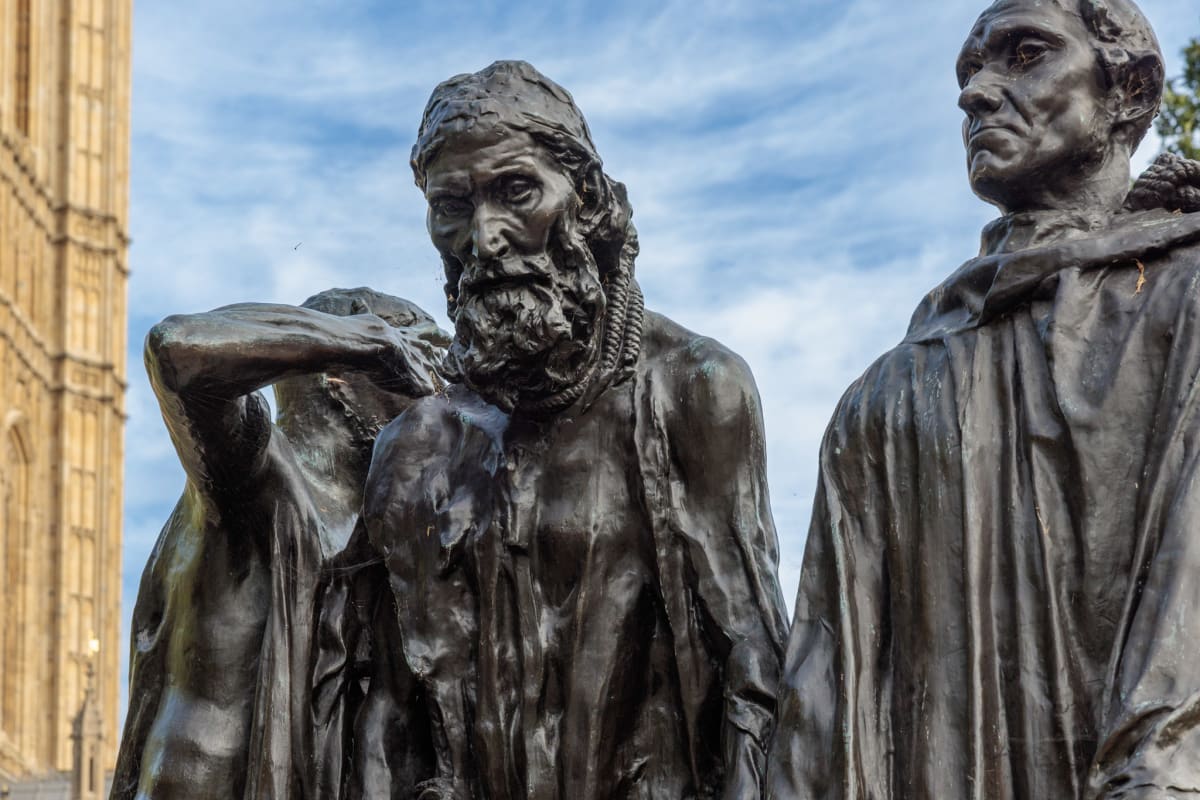
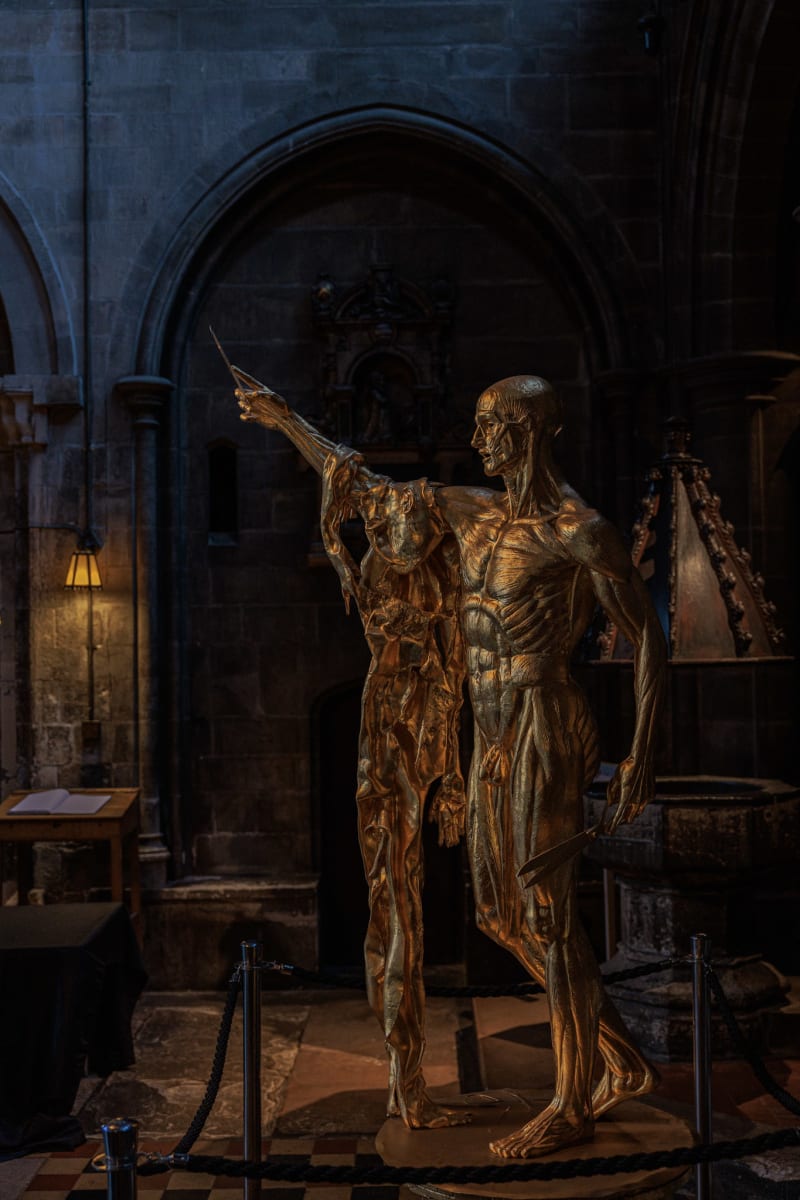
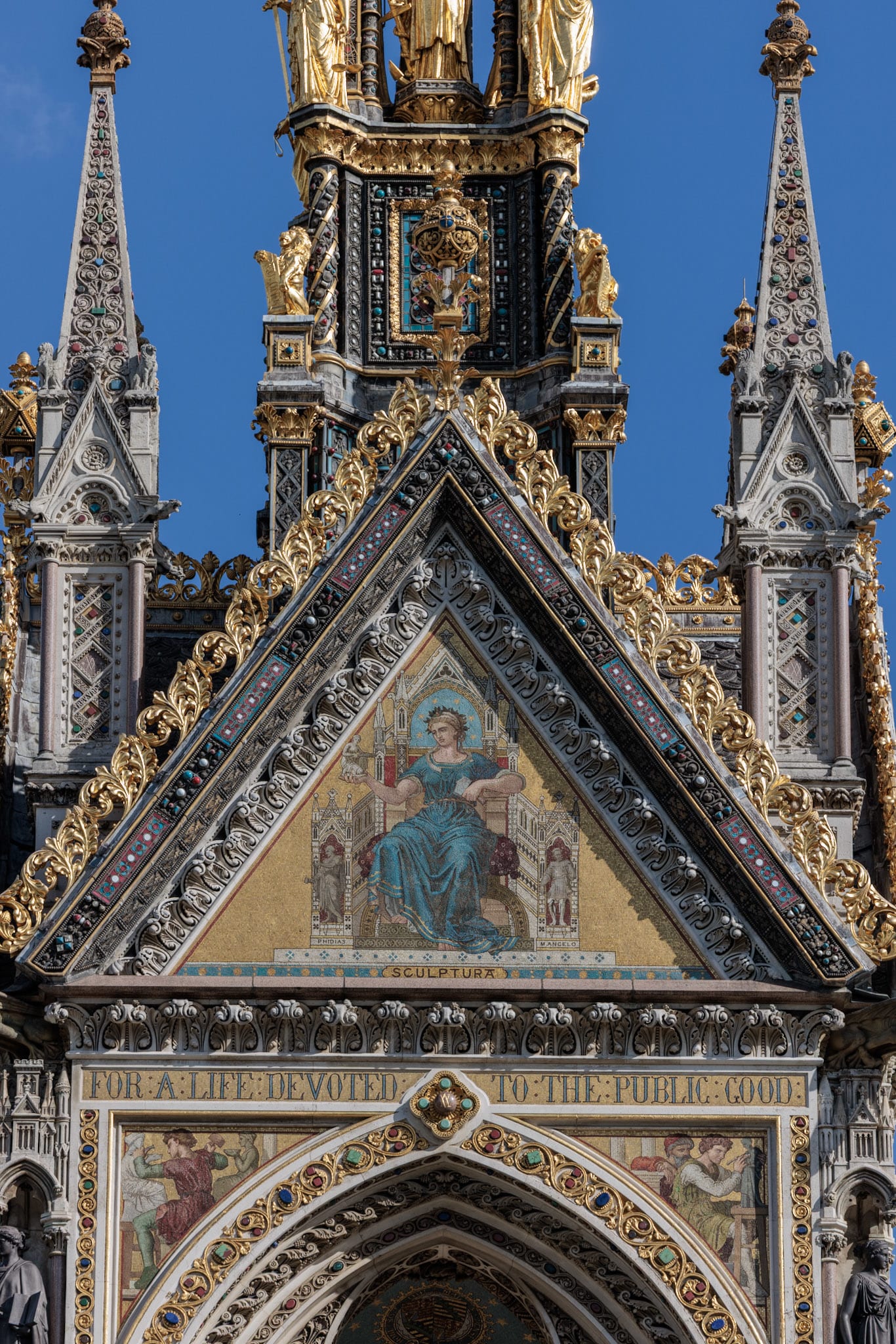
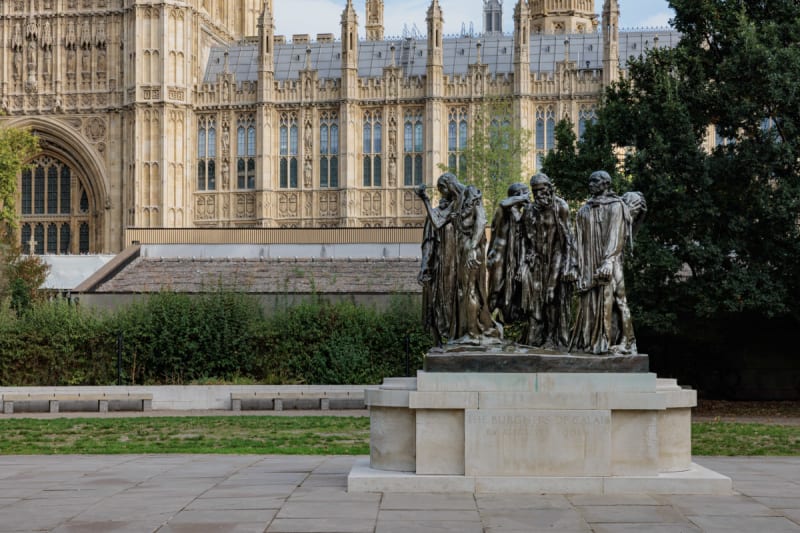
Rodin's Burghers of Calais stand in a small park under the Houses of Parliament with no fence, no glass and no guard, which is how Rodin wanted them and how almost nobody else would dare to show them now. A couple of miles east, in the oldest parish church in the city, Damien Hirst's flayed and gilded Saint Bartholomew holds his own skin over one arm and a scalpel in the other hand, nine hundred years of Romanesque stone looking on. And in Kensington, Albert sits under his canopy in more gold than a Victorian widow should strictly have been allowed.
The city that leaves a Rodin out in the rain and puts a Hirst in a church.
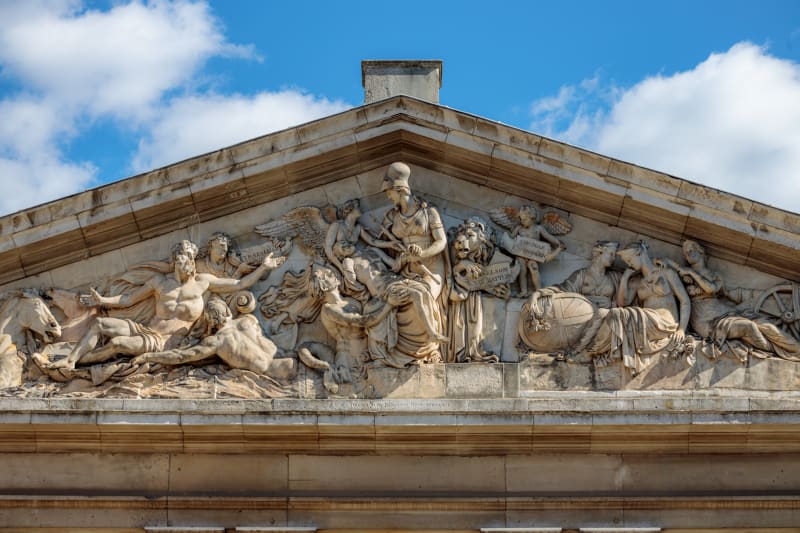
Further out, Greenwich, where the pediment of the Old Royal Naval College tells Nelson's death in a single stone frieze. I photographed it in sections and stitched it into one very large image, which is below in the gallery, zoomable, closer than you can get from the ground.
Features
 Feature · Cultural Heritage
Rodin's Burghers Stand Unguarded in a London Park
How Rodin's Burghers of Calais survives outdoors in London, weathering time and atmosphere. Why this masterpiece belongs in open air, not museums.
 Feature · Culture
Damien Hirst's Golden Saint Confronts London's Oldest Parish Church
A flayed, gold-plated anatomical figure confronts 900 years of Romanesque stone. Hirst's sculpture rewrites the language of martyrdom and medical dissection.
 Feature · Architecture
The Albert Memorial: A Monument of Love, Loss, and Restoration
Standing majestically in Kensington Gardens, the Albert Memorial is one of London’s most iconic landmarks.