
The last thing you handle at a confectionery trade show is grief. You spend your hours under fluorescent light surrounded by spun sugar, foiled chocolate, and the ambient hum of commercial optimism. Everything is bright, everything is provisional, and nothing is meant to last longer than its shelf life. So there is something almost physiologically necessary about walking out of that world and pointing yourself, camera in hand, toward a cemetery.
I had a spare day in Cologne—I always carve one out when I travel for work, a personal rule I hold to even when the schedule argues against it. I had spent the previous days photographing stands and product launches. What I wanted was stone. What I found, eventually, was Melaten.
The Walk That Cologne Doesn't Sell You
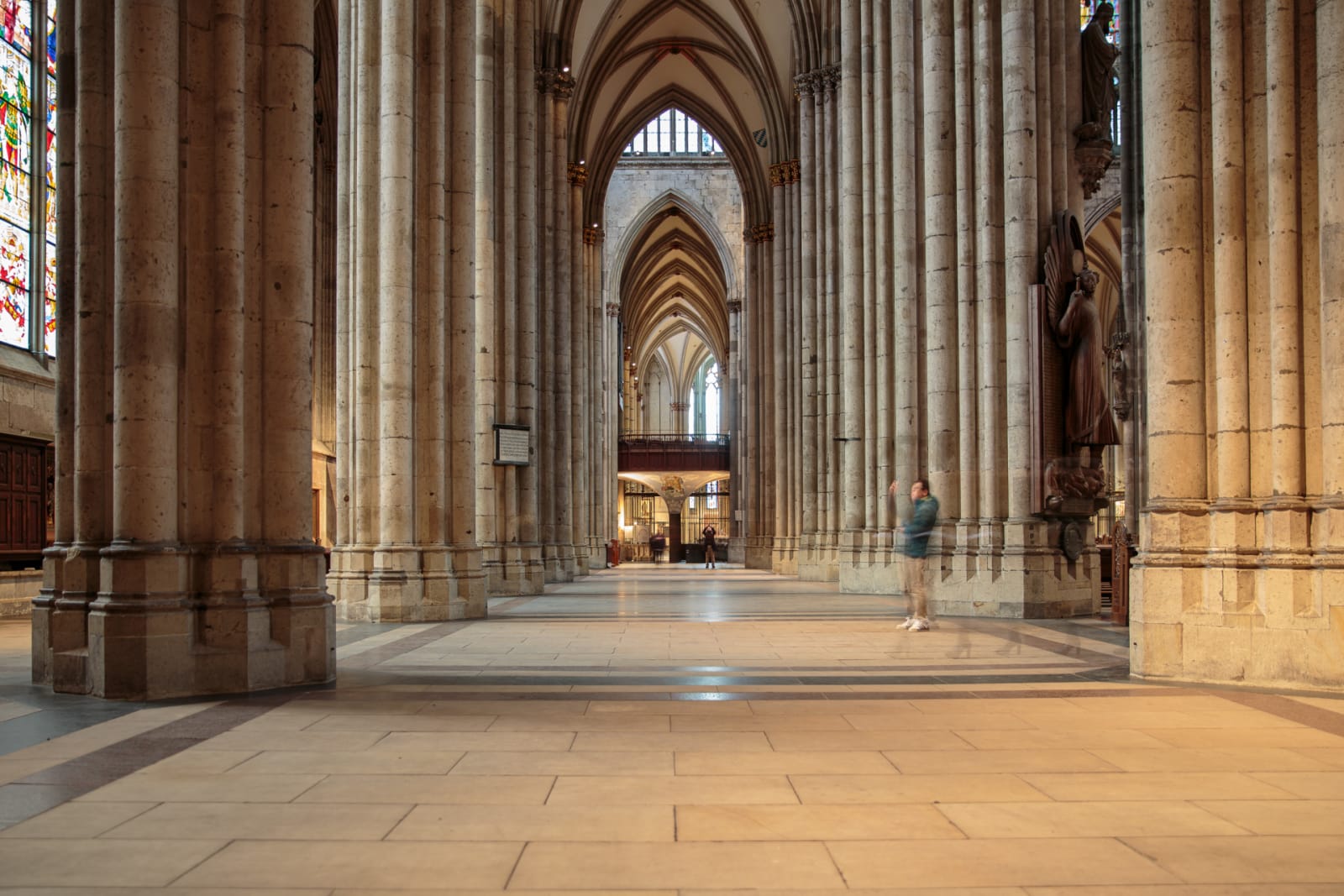
The route from Cologne Cathedral to Melaten-Friedhof is not a tourist route. You leave the shadow of the Dom—that vast, sooty, genuinely overwhelming structure whose twin spires have been scrubbing the Rhineland sky for centuries—and you walk west through the city until the postcard version of Cologne dissolves entirely. The streets narrow and widen again, the architecture loses its ambition, and you start to understand the city not as a sequence of monuments but as a place where people actually conduct their lives. Melaten sits at the end of that understanding. It is Cologne's largest and most famous central cemetery, and it earns that status not through picturesque design but through sheer accumulated weight: generations of the city's dead, organised with the rigour that the living typically reserve for the most serious business.
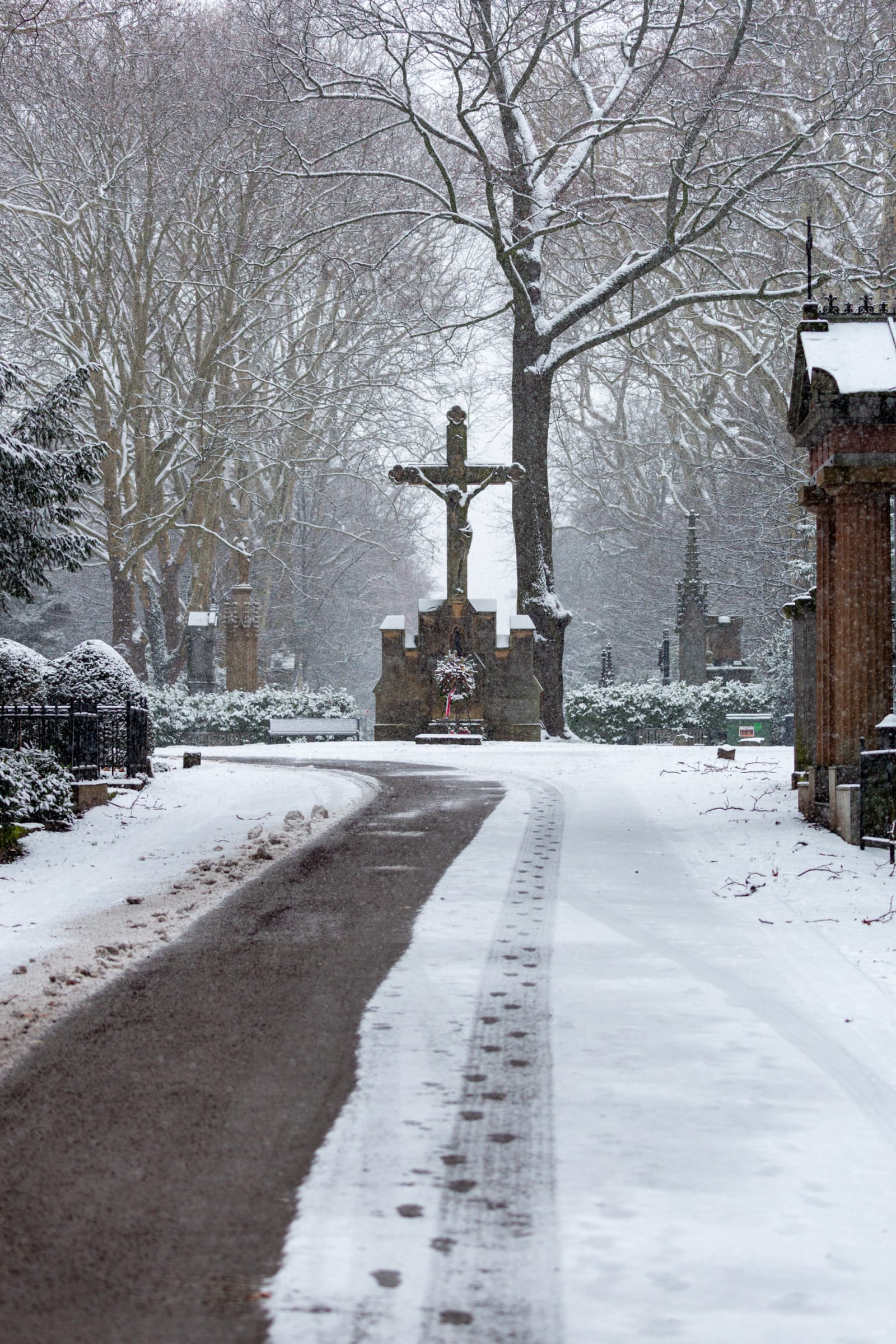
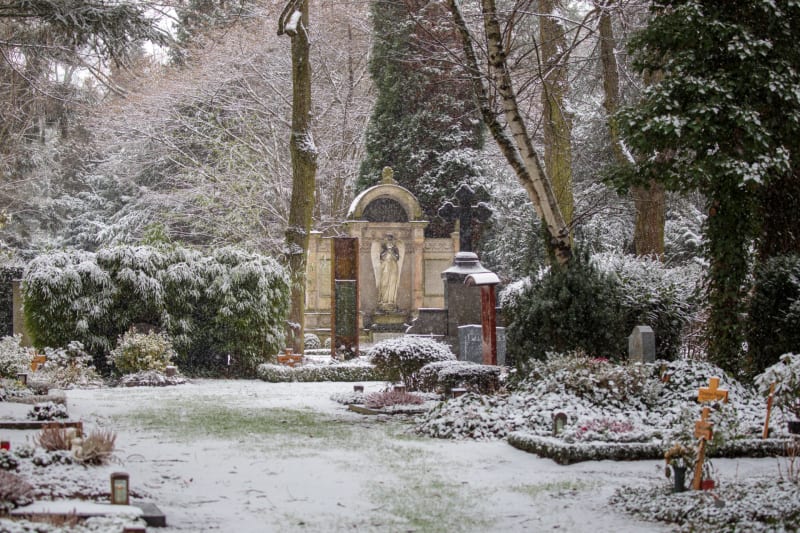
I arrived as the snow started. Not a gentle dusting—a purposeful, thickening fall that arrived with the particular indifference of weather that has no interest in your photographic plans. Within twenty minutes, the cemetery had transformed into something the heritage-industry framing of 'historic garden of the dead' entirely fails to prepare you for: a place that felt sealed off from every ambient noise of the city, each path muffled, each carved surface suddenly detailed by white accumulation in its grooves.

The Praying Angel and the Problem with 'Peaceful'
There is a persistent soft-focus mythology around old cemeteries: that they are democratic spaces, equalising, peaceful. Melaten resists this. What you actually see, if you slow down enough to look, is a city of the dead organised along precisely the same social lines as the city of the living. The plots are not equal. The architecture is not equal. An elegant praying angel stands within a classical stone niche—the kind of enclosure that announces, without any inscription necessary, that the family who commissioned it had money and intended posterity to know it. The surrounding graves defer to it spatially. The niche is a room; the others are plots. This is not a garden of equality. It is a neighbourhood, and the good addresses are obvious.
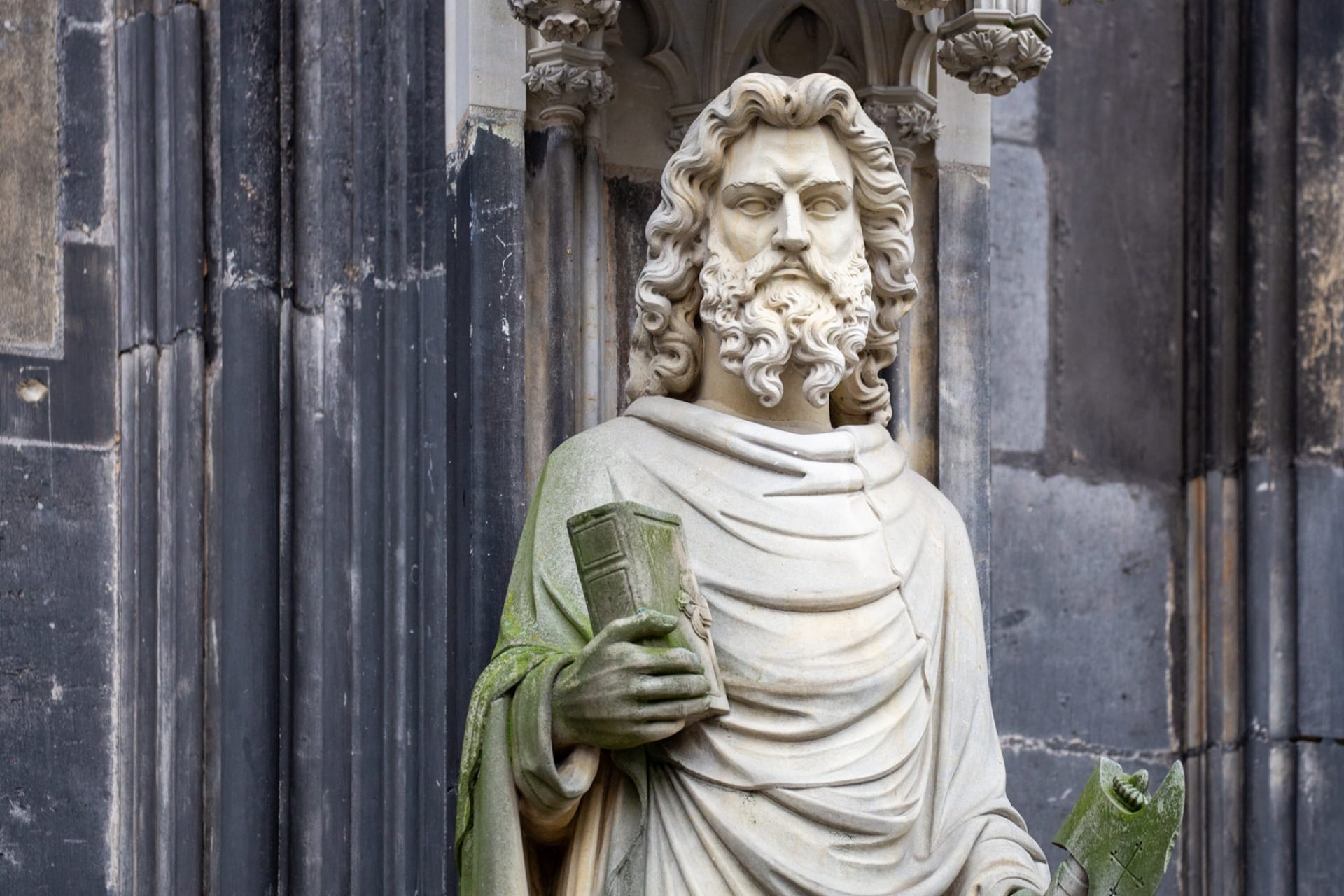
Photographing it requires you to abandon the reflex that cemetery shots should be soft, elegiac, romantically blurred. The detail in the stonework demands precision. The angel's robes have been carved with the seriousness of someone who understood that the material would be read for generations. To photograph it with selective focus and a warm filter would be to lie about what it is.
The plots are not equal. The architecture is not equal. Melaten is a neighbourhood, and the good addresses are obvious.
What Oxidation Knows
The monument that stopped me longest was a weathered stone structure carrying an oxidized bronze relief of a religious scene: three figures, their gestures still legible beneath the green patina that copper develops when it has been exposed to enough decades of Rhineland weather. The snow was settling on every horizontal surface—on the carved ledges of the stone, on the shoulders of the figures in the relief, on the surrounding evergreens—and the chromatic result was something a colourist might have planned: the green of the patina, the grey of the stone, and the white of the snow forming a palette that was simultaneously about decay and about preservation.
This is what oxidation actually is, if you think about it for a moment rather than simply labelling it 'aged': it is the surface of a material in ongoing chemical conversation with its environment. The patina is not the original bronze becoming old. It is the bronze becoming something else—copper carbonate, in this case—while the underlying metal holds. The religious scene beneath the green is as precise as the day it was cast. The weathering is a record, not a damage.
The cathedral gets photographed because it is enormous and because everyone else is photographing it and because the light falls on it in ways that have been documented exhaustively. The bronze relief at Melaten gets photographed because you stopped, in the snow, and actually looked at it. There is no tourism infrastructure directing your attention. The instruction to look comes entirely from the object itself.
The Walk Back
By the time I left, the snow had achieved the slush that German winter afternoons specialise in: grey, heavy, ankle-deep at the kerbs, and completely indifferent to the quality of your boots. The walk back toward the centre of Cologne was not poetic. It was cold and wet and the camera bag was heavier than I remembered.
The instruction to look comes entirely from the object itself — there is no tourism infrastructure directing your attention.
But that friction felt honest in a way that the trade show halls, with their engineered warmth and their precisely calibrated displays, do not. The most useful cultural seeing I did in Cologne happened not in the commercial spaces I was paid to visit, nor at the cathedral whose reputation preceded it by several centuries. It happened in a cemetery in the snow, reading a bronze relief that has been quietly oxidizing into green for longer than anyone now alive can personally remember. The slush on the way back was the proof that you had actually been somewhere. The photographs, if they work, should carry the same evidence.